Let's talk about joint replacements: what are they?, most common causes of joint wear, measures to prevent accelerated wear.
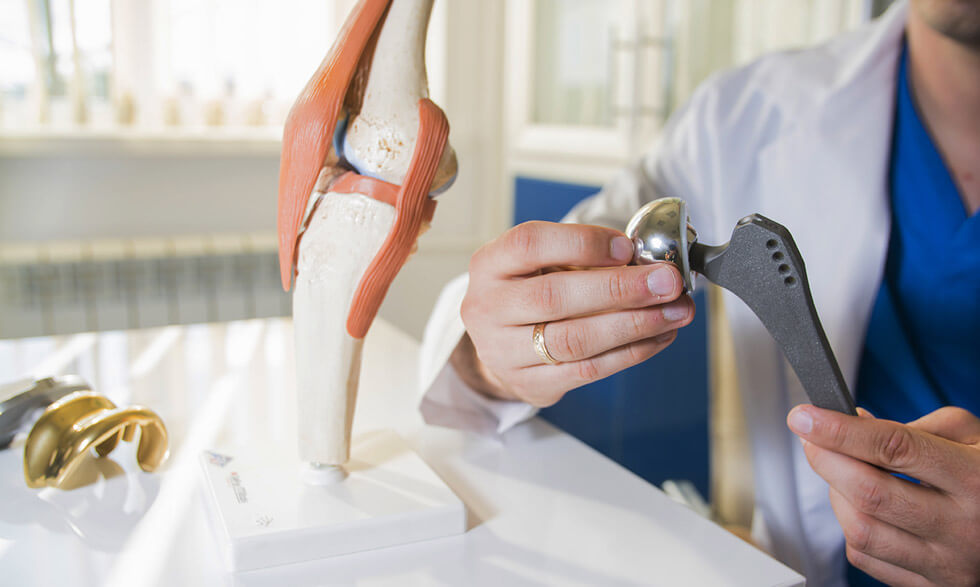
Joint replacement surgery has as its main objective to relieve the pain of a severely injured joint, trying to preserve the best functionality.
This procedure becomes an option when all the treatments to improve the pain and the functionality of the joint have failed and it consists of removing the cartilage and part of the injured bone to be replaced by metallic, plastic and even ceramic components.
- What are the most common causes of joint wear?
We tell you!
- The joint deformities typical of people are related to some risk factors such as obesity and excessive high-impact exercises without advice, which produces accelerated wear on them.
Metabolic or autoimmune diseases that affect the joints, such as rheumatoid arthritis, are also a cause of accelerated joint wear. - Sedentary lifestyle has also been shown to be an important cause of joint wear, generating weak and unstable joints.
Conclusion, all patients with mature skeletal age, that is, who have finished their growth and who present irreversible joint damage, in which the different treatments to improve the pain and functionality of the injured joint have failed, are candidates for surgery. joint replacement.
2. How to prevent accelerated wear and maintain joint health for longer?
- It is necessary to know the state of the joints through a consultation with the orthopedist, even more so if you present some of the causes named above, in this consultation the risk of accelerated wear of a joint will be assessed according to its current state, state of weight and the genetic load.
Find a balance that allows you to carry out recommended physical activity without putting your joints at risk. REMEMBER Everything in excess is bad! This is how excessive high-impact exercise without counseling and repetitive movements of a joint could lead to accelerated wear and tear on it, in the same way, the decrease in levels of physical activity could also contribute to the appearance of joint wear. (osteoarthritis) by generating weaker and more unstable joints.
3. Life after a joint replacement
After having undergone a joint replacement, you can resume a normal life, carrying out the activities that were affected before the replacement, you can even resume regular physical activity after a phase of controlled rehabilitation.
It is important to clarify that the physical activity to start must be supervised in order not to compromise the useful life of the joint replacement.